For construction projects in Chile that require flexible, on-site concrete production, AIMIX self loading concrete mixer in Chile provide an integrated concrete production solution with individual discharge capacities ranging from 1.8 to 6.5 m³, depending on the model.
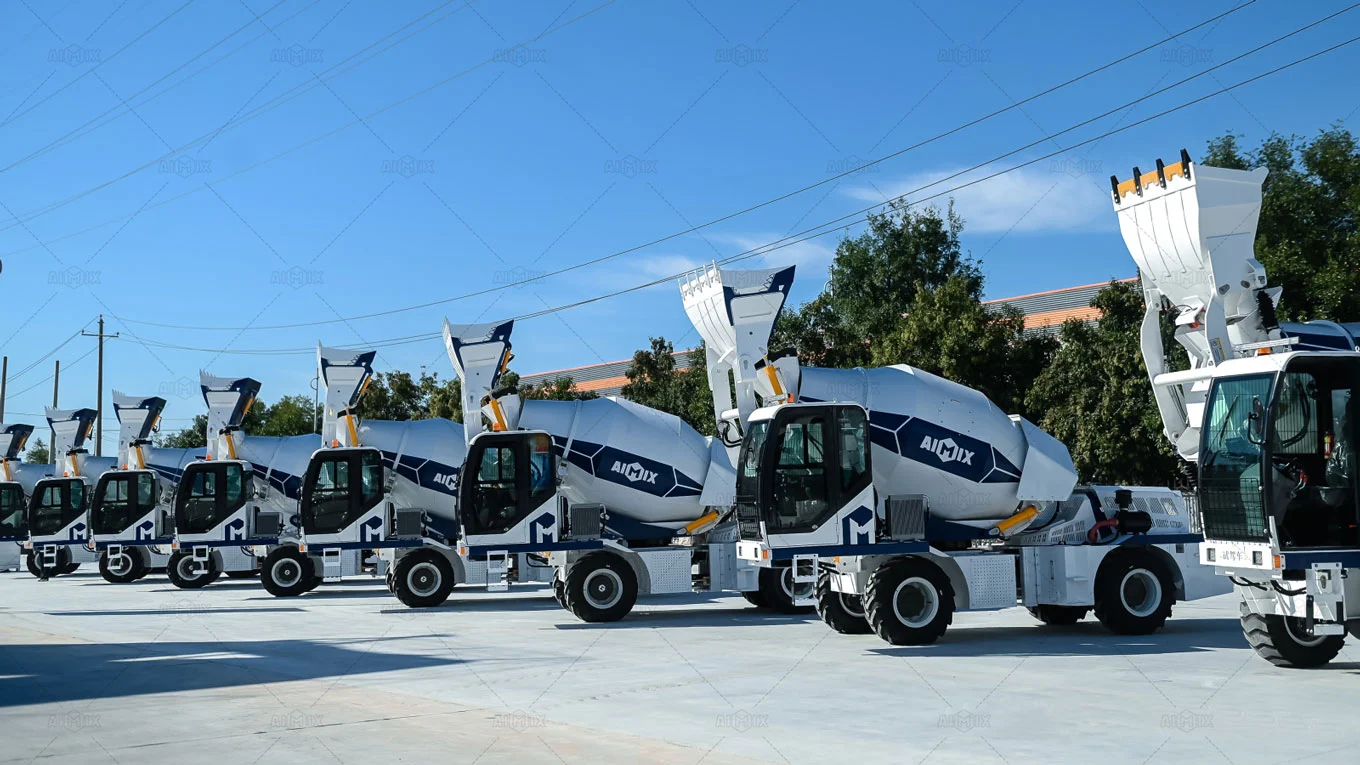
By combining aggregate loading, material weighing, mixing, transportation, and discharging in one machine, it supports continuous concrete supply for remote road projects, mining support facilities, rural housing, culverts, bridges, and other scattered construction sites. In Chile, where construction conditions range from the arid Atacama Desert and high-altitude Andes to rainy southern regions, the self loading mixer helps contractors produce concrete closer to the pouring location, reducing reliance on separate loading and mixing equipment when access to stationary batching plants is limited or transport distances are considerable.
Chile’s Regional Construction Conditions & Matching Concrete Applications
Chile stretches over 4,200 km with drastically different construction environments from north to south.
- Northern Atacama: arid, remote mining zones with limited ready-mix supply
- Andean highlands: steep, narrow mountain roads and altitude power loss
- Central Chile: dense urban sites, tight space and seismic building requirements
- Southern Chile: heavy rainfall, muddy clay ground and coastal salt corrosion
Our self loading concrete mixers are widely used by mining contractors, road teams, local builders and rental companies for scattered, small-to-medium concrete pours across these distinct zones.
Northern Chile: Atacama Desert & Mining Auxiliary Works
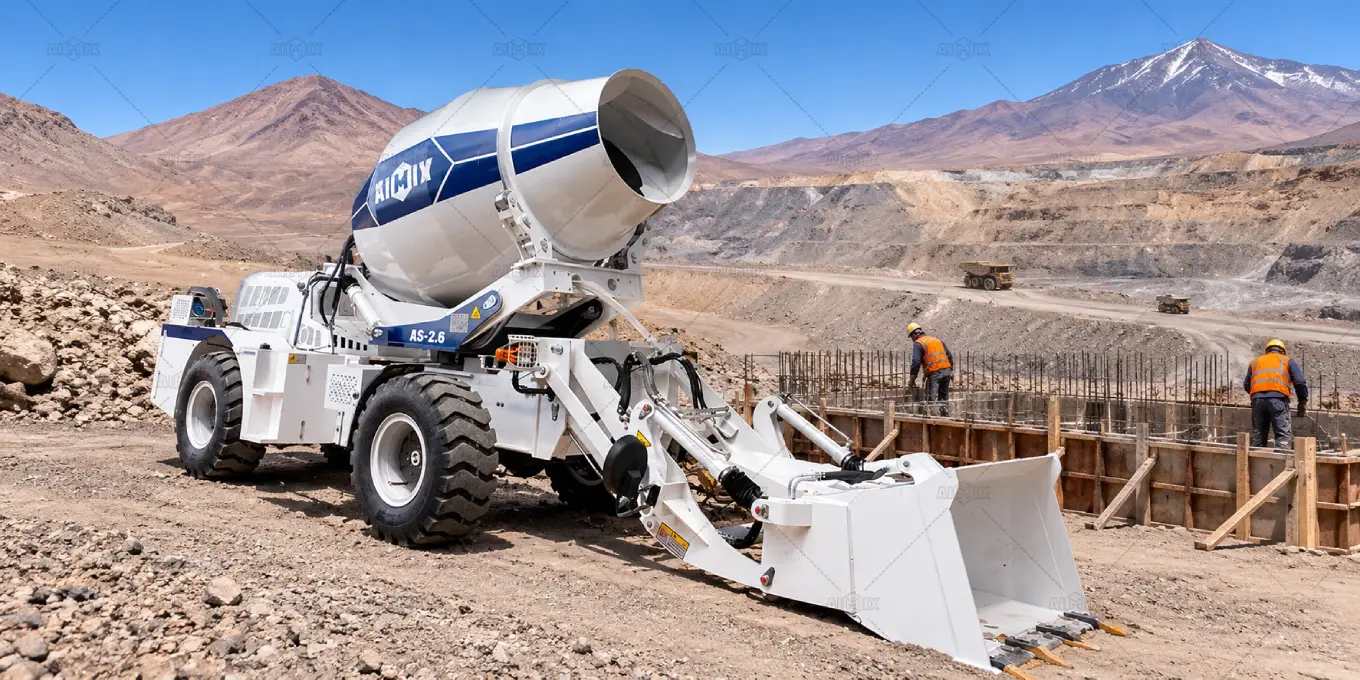
Local construction challenges
- Extreme arid climate, strong solar radiation and limited freshwater
- Very long distances between worksites and stationary batching plants
- Rough gravel mine access roads without regular ready-mix delivery
- Fast concrete slump loss and high water evaporation under desert heat
- Intermittent small pours can’t justify building a stationary batching plant
Typical project applications
- Mine auxiliary foundation pads and equipment bases
- Containment bunds, drainage ditches and sediment control structures
- Mine access road repair and small retaining walls
- Routine maintenance concrete works for mining sites
How self loading mixers solve these issues
- Produce fresh concrete on-site, no reliance on third-party ready-mix trucks
- Optional upgraded heat dissipation, UV-resistant paint and larger water tanks
- Avoid concrete waste caused by long-distance desert transportation
- Easy to relocate between scattered satellite mining work zones
Andean Highlands: Mountain Roads & Remote Linear Works
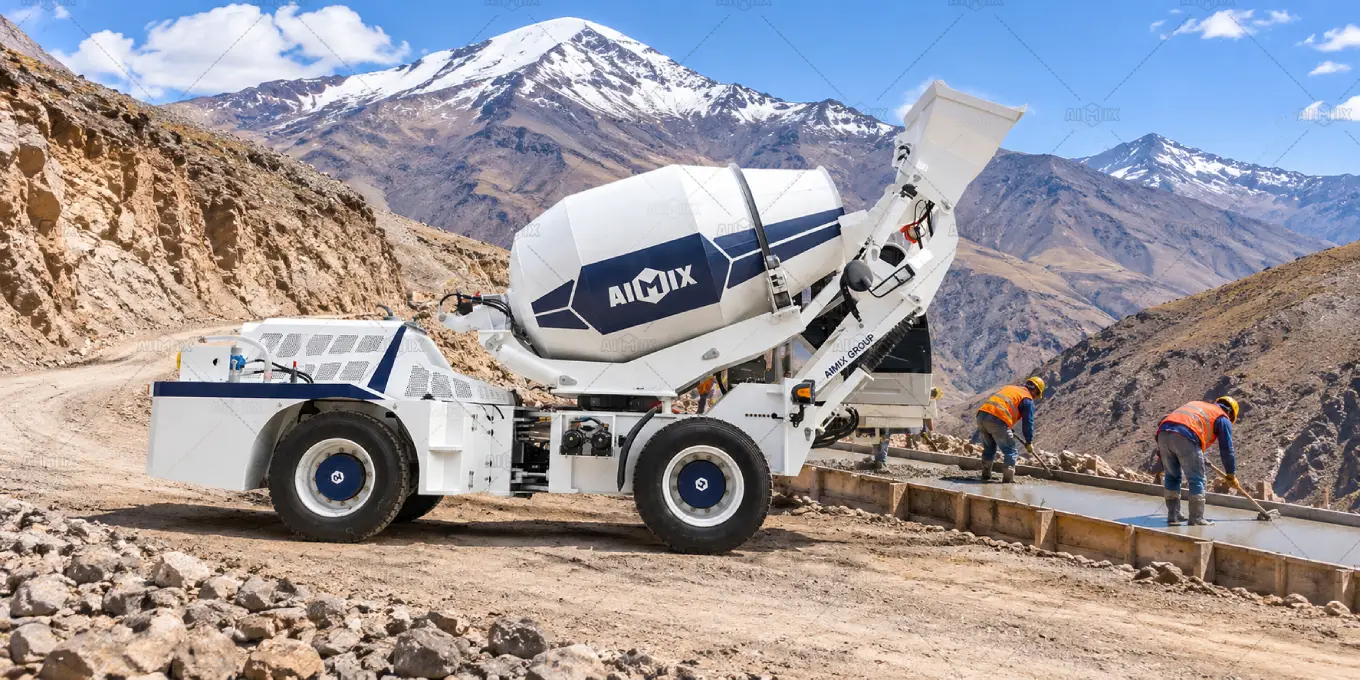
Local construction challenges
- Steep slopes, narrow winding unpaved tracks and rocky terrain
- High altitude reduces engine power of standard construction machines
- Large ready-mix transit trucks cannot navigate tight mountain bends
- Pour points spread along long, linear road corridors
Typical project applications
- Rural road rehabilitation and surface repair
- Small culvert construction and slope stabilisation
- Retaining walls and remote bridge substructure works
- Mountain trail and farm access upgrade projects
How self loading mixers solve these issues
- High-ground-clearance articulated chassis adapts to uneven, rocky mountain tracks
- Altitude-optimised Cummins diesel engine to maintain stable power output
- Heavy-duty 4wd off-road tyres for slippery and broken stone surfaces
- One unit can travel between multiple separate pouring points along the route
Central Chile: Urban Zones, Housing & Small Commercial Builds
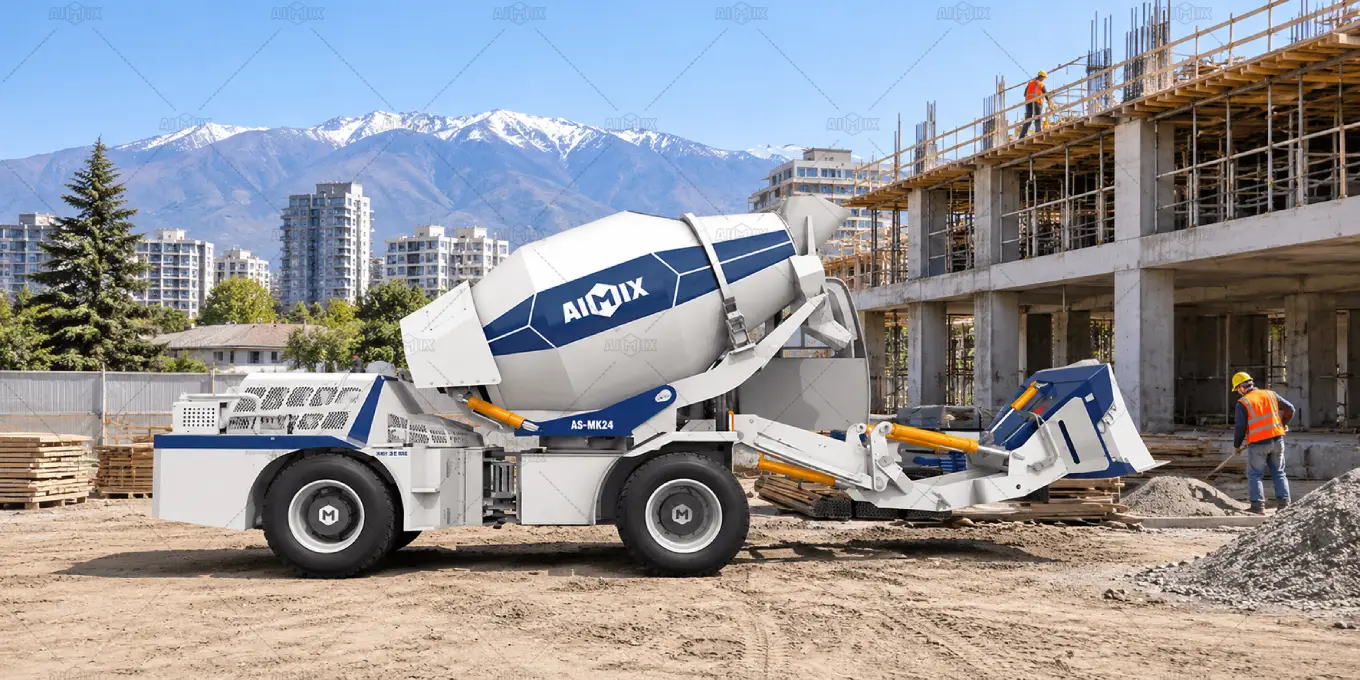
Local construction challenges
- Limited working space in compact urban and suburban lots
- Rising construction labour costs across Santiago and Concepción
- Strict local emission, noise and environmental site regulations
- Chile’s mandatory seismic design requirements for concrete structures
- Coordinating multiple separate machines increases scheduling risk
Typical project applications
- Residential housing and villa foundation works
- Small warehouses, workshops and light commercial buildings
- Municipal sidewalk, kerb and small public space upgrades
- Subdivision infrastructure for new housing developments
How self loading mixers solve these issues
- Compact footprint to operate on cramped urban construction yards
- Built-in 2.0 electronic weighing system for consistent, code-compliant mix ratios, weighing error less than 2%
- Low-emission engine options available to meet urban environmental rules
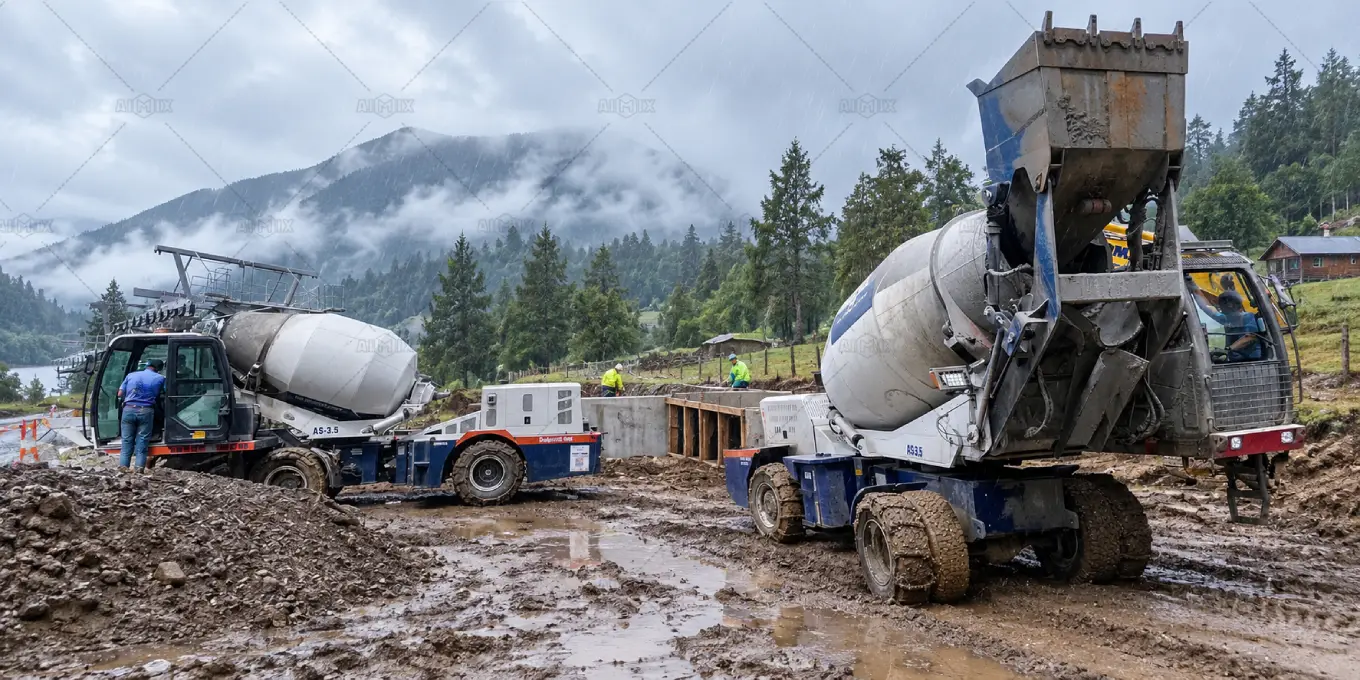
Southern Chile: Rainy, Soft-Ground Rural & Drainage Projects
Local construction challenges
- High annual rainfall and waterlogged clay soil
- Ordinary construction vehicles easily sink into muddy ground
- Coastal humid, salt-laden air accelerates steel corrosion
- Worksites scattered across forest and farmland
- Uneconomical to order ready-mix for small, one-off pours
Typical project applications
- Drainage channels, headwalls and farm runoff control structures
- Small bridge footings and rural culvert projects
- Foundation works for isolated rural buildings
- Small community public infrastructure
How self loading mixers solve these issues
- Deep-tread off-road tyres prevent sinking on soft muddy ground
- Anti-corrosion treatment for mixing drum and hydraulic components
- Batch concrete on demand, no delays from rain-closed rural roads
- Eliminates the high minimum order cost of ready-mix suppliers
Key Operational Benefits of Self Loading Concrete Mixers
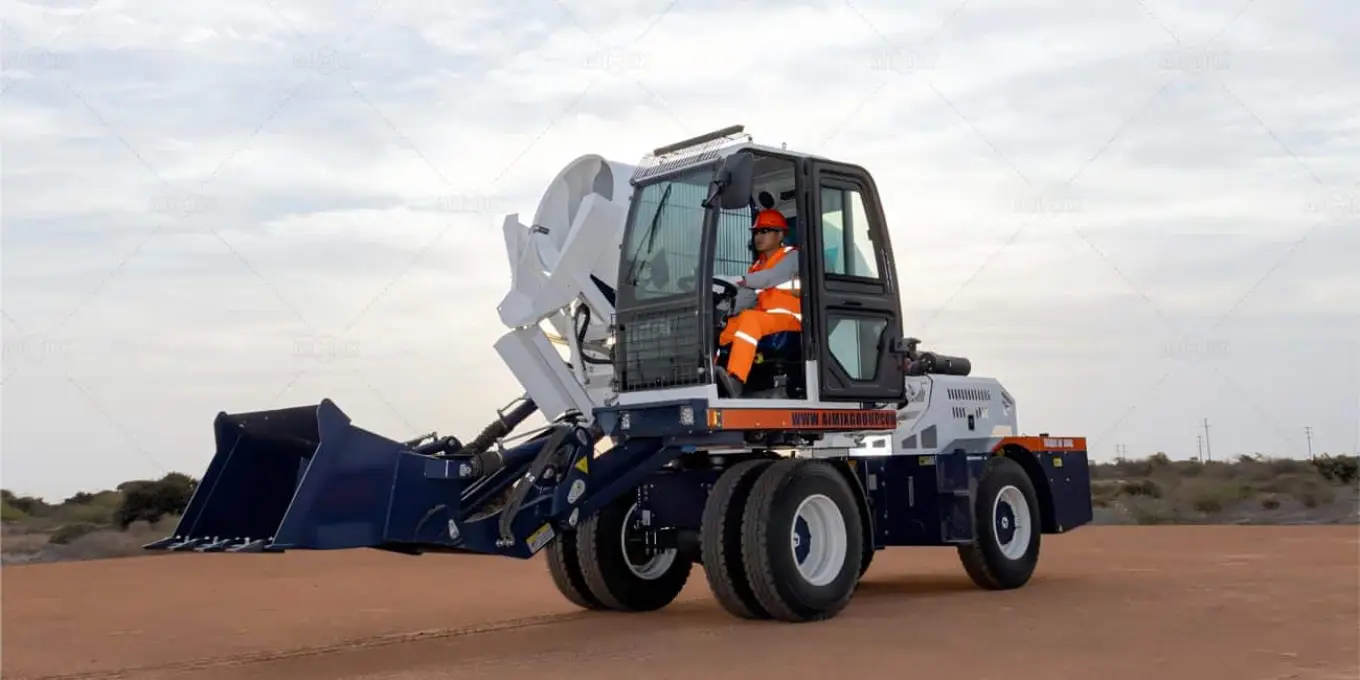
Produce Concrete Directly at the Construction Site
- Breaks dependency on ready‑mix suppliers and fixed batching plant schedules
- Eliminates concrete slump loss and quality risks from long‑haul transit
- Allows real‑time mix adjustment to match site engineering requirements
- Works independently when road closures or supply delays disrupt concrete delivery
- Integrates four separate functions into one single machine unit
- Removes the need to rent and coordinate a standalone loader
- Reduces the total number of heavy vehicles on site
- Built‑in electronic weighing maintains consistent batching quality
Move Between Multiple Pouring Locations
- Delivers fresh batches sequentially across distributed, linear project points
- No mandatory return trip to a central batching station between pours
- Boosts equipment utilisation rate, a critical metric for Chile rental fleets
- Cuts travel and waiting downtime for scattered infrastructure works
Reduce Coordination Between Separate Machines
- Requires only one certified operator for the full concrete cycle
- Lowers overall site labour demand and labour management overhead
- Simplifies scheduling and reduces cross‑crew communication risks
- Easier to deploy on remote sites with limited skilled workforce
Aimix AS-Series Models for Chile: Model Selection Guidance
Our AS-series self loading concrete mixers for Chile deliver batch output from 1.8 m³ to 6.5 m³. The available models include AS-1.8, AS-2.6C, AS-3.5A, AS-3.5B, AS-3.5C, AS-MK24, AS-4.5C, AS-5.5 and AS-6.5. Every variant comes with factory-fixed chassis configuration, and we match each model to Chile’s diverse terrain and construction needs below.
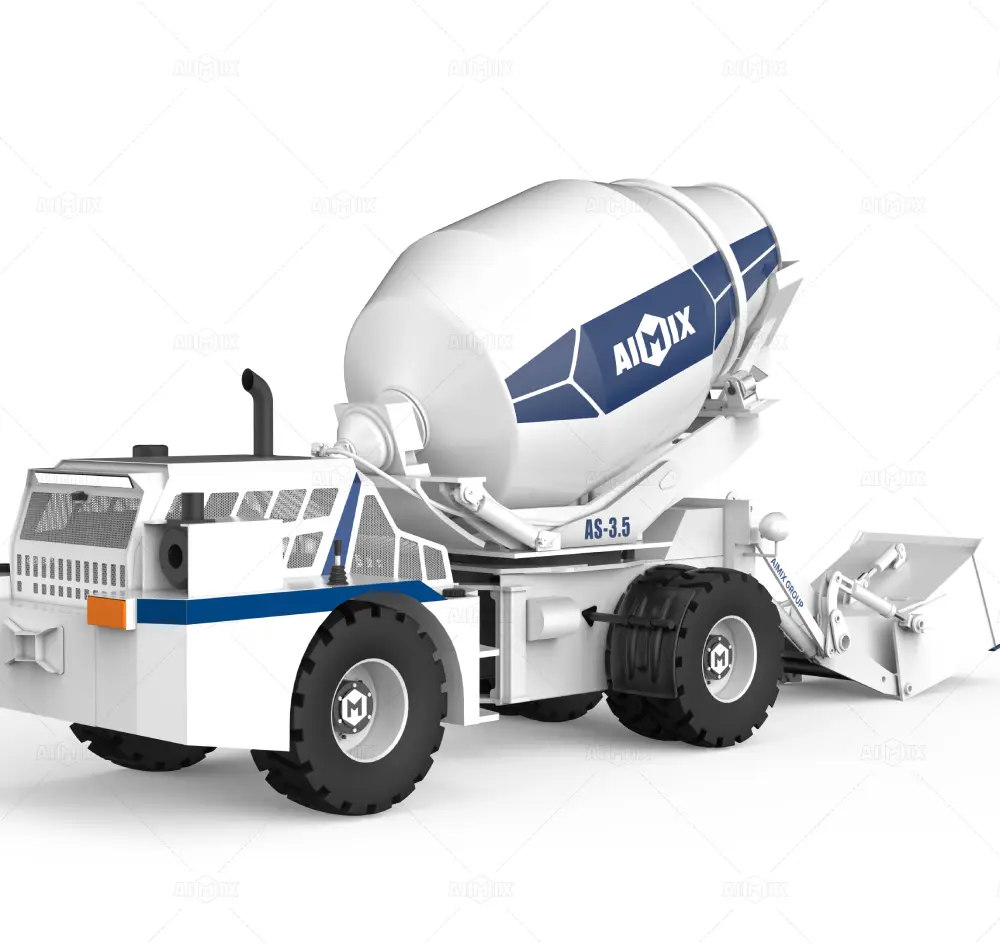
AS3.5A / AS-3.5B / AS-3.5C
—— Long-Time Best-Selling Model for Chile Market, global export volume > 1000 units
- Batch output: 3.5 m³; 4 batches per hour → 14 m³/h production; often kept in factory stock for fast delivery
- Best fit scenarios: Most popular for medium projects across central Chile: warehouse construction, municipal road repair, rural public housing. Balanced mobility & productivity, the preferred baseline option for most local contractors and rental businesses.
- Note: Reliable performance, fully proven at numerous construction sites in Chile; simple to operate, with a well-established spare parts supply system.
ABC Styles for Choices:
- AS-3.5A: Cost-effective 4-wheel version for flat urban/suburban sites
- AS-3.5B: 6-wheel heavy-load variant for gravel mine access roads
- AS-3.5C: Rotatable cabin premium version for mountain slope pouring safety
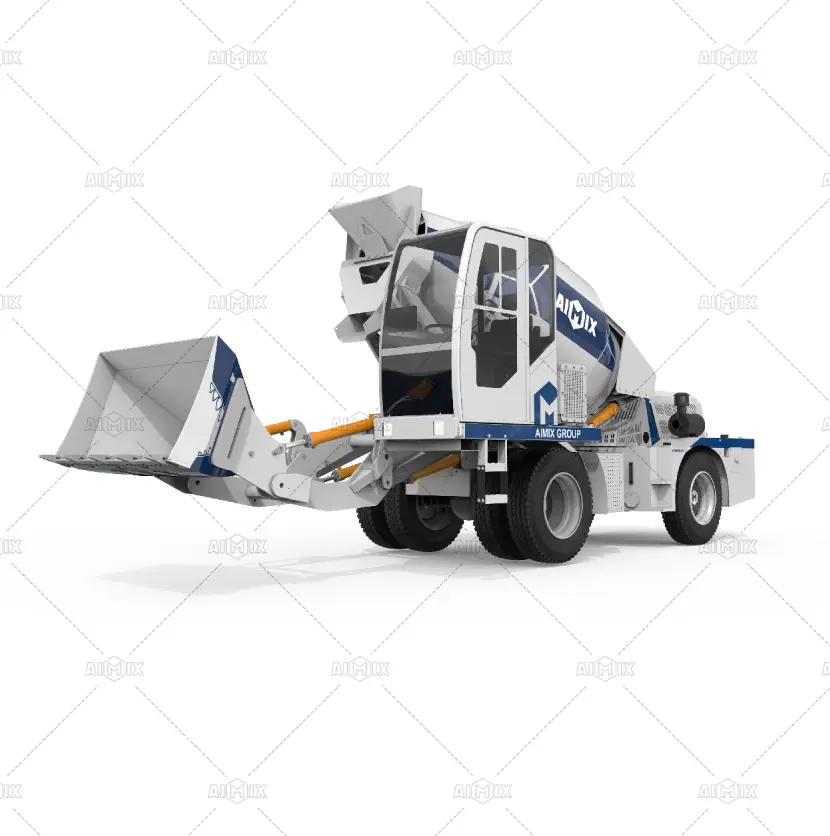
AS-MK24
—— Upgraded High-Efficiency Model, Strong Recommendation for Chile Buyers
- Batch output: 4.0 m³, 6 batches per hour, hourly production up to 24 m³/h; supports concrete grade up to C50
- Best fit scenarios: Mine auxiliary concrete supply, medium‑sized road rehabilitation, multi‑site rental fleets, housing and commercial foundations. It works well across northern desert, Andean mountain and southern muddy sites.
- Higher hourly throughput without a sharp jump in purchase cost; ideal if your budget allows a modest upgrade from AS-3.5A/B/C
- Dual-drive 720° mixing system delivers more uniform concrete, stable for high‑strength seismic concrete required by Chile building codes
- Larger loading bucket, intelligent tipping alarm and maintenance reminder system
- Multilingual control panel (English / Spanish) for local Chile operators
- If you are currently quoting AS‑3.5 and your budget can stretch slightly, AS‑MK24 is our top recommended upgrade. It delivers meaningful productivity gains and higher fleet revenue for rental companies.
Core upgrade highlights vs AS-3.5 series:
Buying tip:
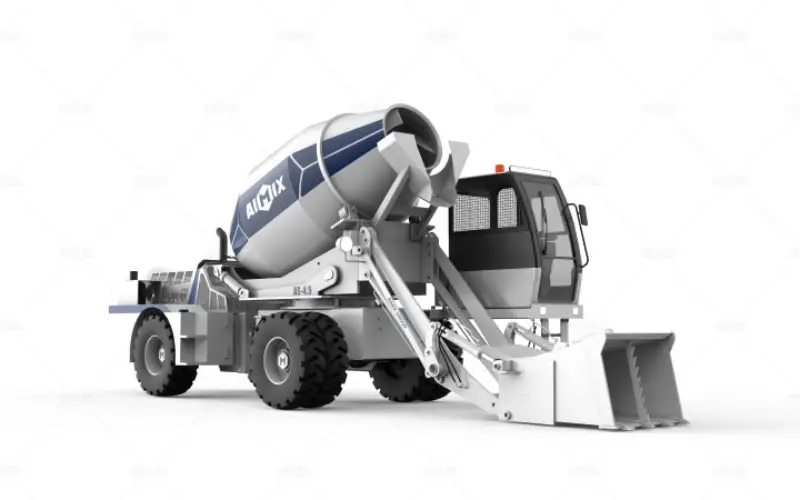
AS-4.5C
—— Second In Sales By Model, Trailing The AS-3.5
- Hourly capacity: 18 m³/h; large‑volume integrated water tank for mixing water and daily machine cleaning
- Best fit scenarios: Medium‑large building projects, harbour auxiliary work, foundation pouring. Many Chile customers pair AS-4.5C together with ABT40C concrete stationary pump, delivering concrete toward hard-to-reach high or deep positions and lifting overall site productivity.
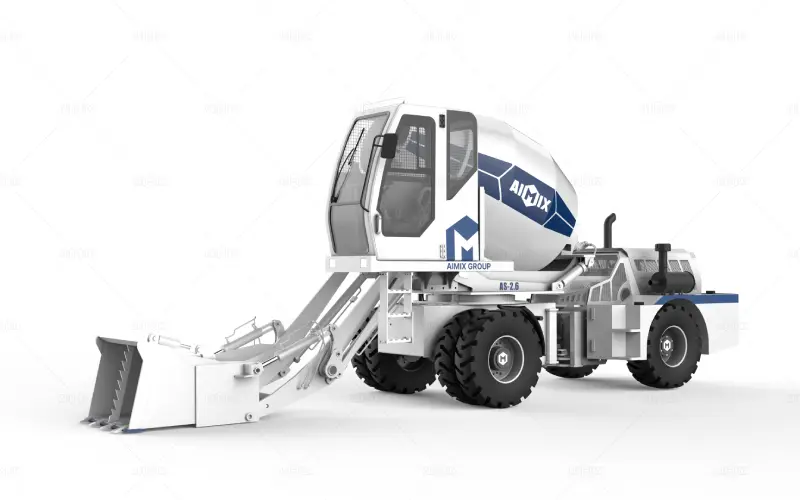
AS‑1.8 & AS‑2.6C —— Small-size, Mini-range
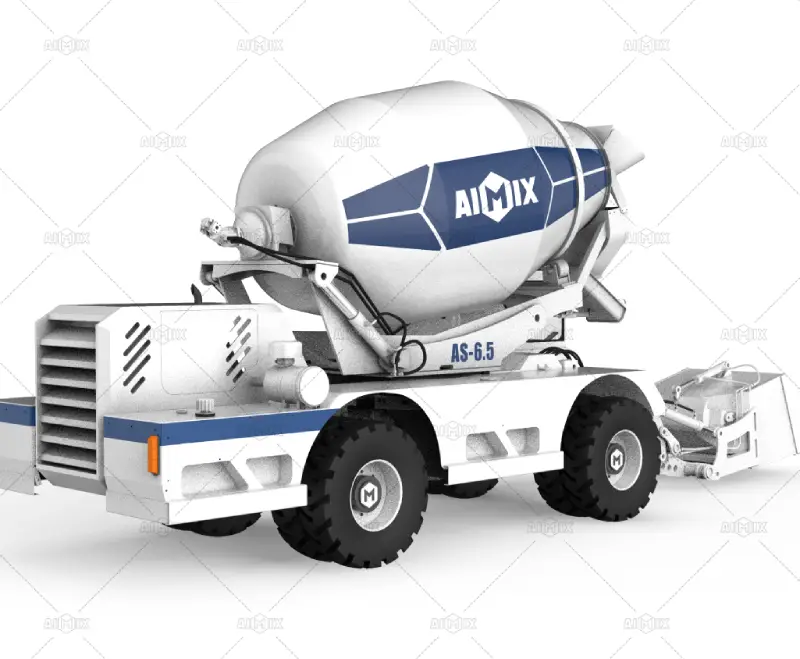
AS‑5.5 & AS‑6.5 —— Large Capacity Models
Comparison with AS-MK24:
Buying tip:
Completed Chile Self Loading Mixer Application Projects & Practical Site Outcomes
AS-2.6 Self Loading Concrete Mixer – Rural Housing & Culvert Works, Los Ríos Region
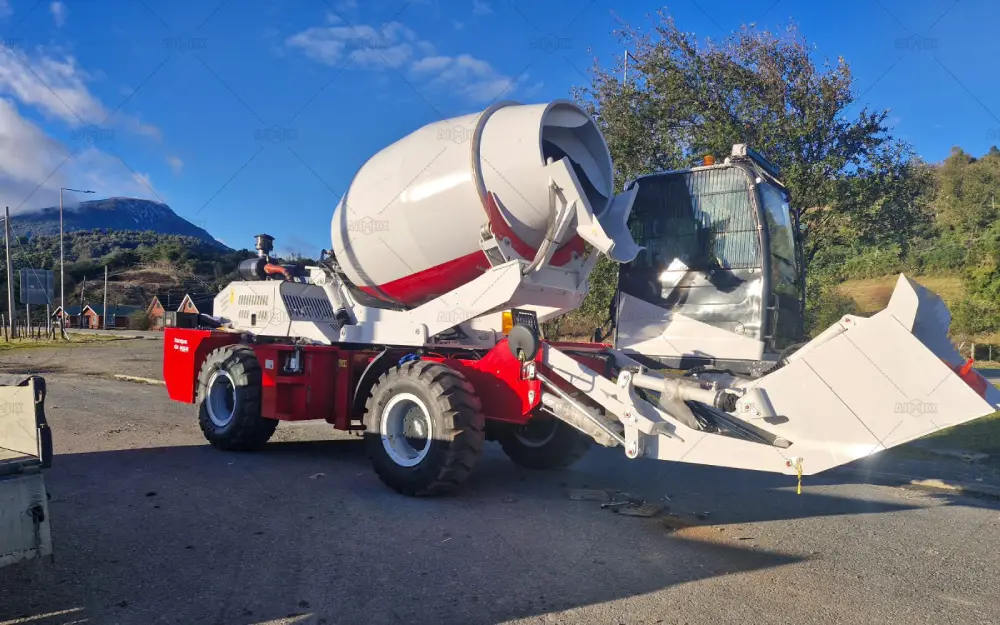
AS-3.5A Self Loading Concrete Mixer – Rural House Foundations, Curicó Valley
AS-1.8 Self Loading Concrete Mixer – Factory Construction, San Pedro de Atacama
Matching Concrete Pumping Equipment Solutions to Expand Your Pouring Reach in Chile
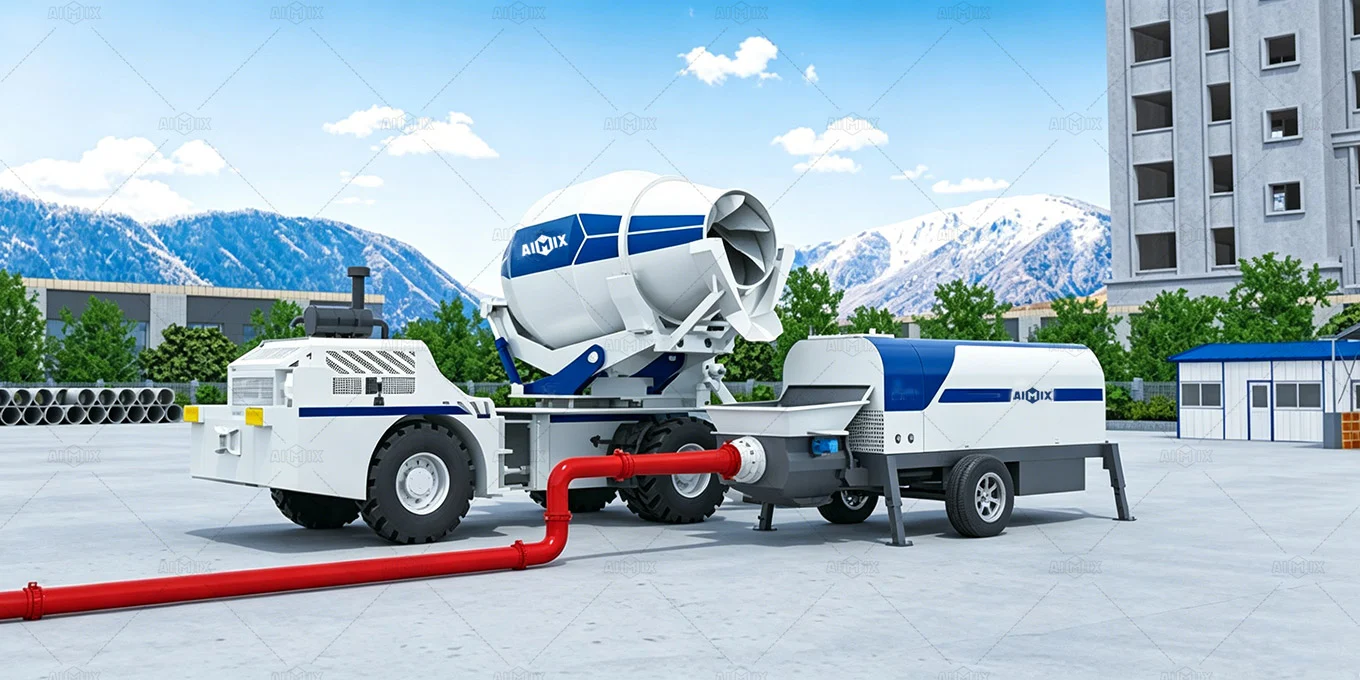
Self loading mixers for sale in Chile deliver great flexibility on their own, but many contractors pair them with concrete pumps to tackle harder pouring tasks and expand what they can deliver on site. The most popular packages are AS-3.5 + ABT40C, AS-4.5C + ABT40C and AS-5.5 + ABT60C.
Working Principles
- The self loading concrete mixer completes batching and mixing, then discharges fresh concrete directly into the pump hopper.
- The concrete pump pushes concrete through sealed pipelines toward pre‑arranged pouring points.
- Pipelines flexibly follow site layouts and bypass obstacles on the construction site.
- The concrete flows continuously along the pipeline for steady placement.
Practical Benefits of Mixer + Pump Combo for Chile Sites
- Extends your pouring reach to locations the mixer can’t drive to
- Preserves fresh, on‑batched concrete quality all the way to the pour point, without secondary handling
- Minimises concrete segregation, helping you meet Chile’s seismic concrete requirements
- Simplifies site workflow coordination for remote crews with limited skilled workers
- Creates a higher‑value rental package to win more jobs and lift rental revenue for equipment fleets
Buying Guide: How to Evaluate Self Loading Concrete Mixer Costs in Chile
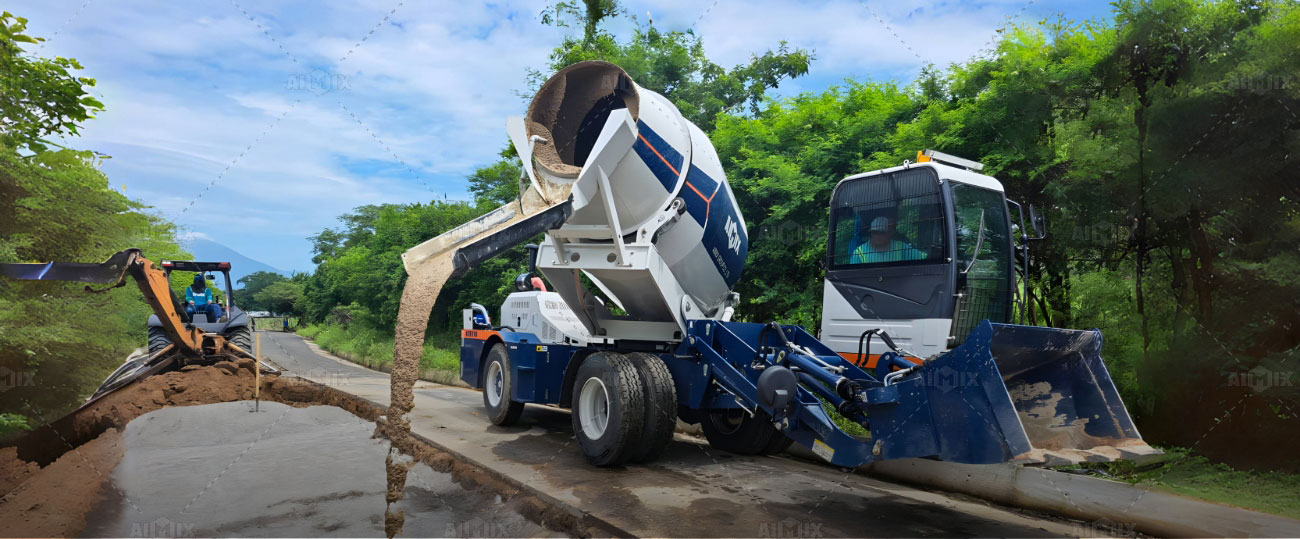
When purchasing a self loading concrete mixer in Chile, buyers should evaluate the total investment rather than focusing only on the FOB machine price. Equipment configuration, shipping, import expenses, fuel consumption, maintenance, and after-sales support all affect the overall ownership cost.
What Determines the Self Loading Concrete Mixer Price?
-
The price of an AIMIX self loading concrete mixer in Chile generally ranges from US$14,000 to US$58,000, equivalent to approximately CLP 13.73 million to CLP 56.87 million at an indicative exchange rate of US$1 = CLP 980.59. The actual quotation depends on the exchange rate and selected configuration. Key price factors include:
- Model and capacity: Loading capacity, single-batch discharge volume, and hourly output.
- Core components: Engine, hydraulic system, weighing system, and chassis configuration.
- Working conditions: Tires, drive system, and corrosion protection suited to the project’s terrain and climate.
- Optional equipment: Concrete pump matching and other customized configurations.
Shipping, Customs Clearance and Inland Transportation in Chile
Fuel Consumption, Maintenance and Long-Term Operating Costs
Spare Parts, Warranty and Technical Support
Overall, buyers should compare equipment price, import expenses, operating costs, and after-sales support together. Selecting a machine that matches the project’s production needs and working conditions helps control long-term costs and maintain reliable operation.
What Information Should You Provide for an Accurate Quotation?
Before requesting a quotation, prepare the following project details:
- Working location: Northern desert, central Chile, southern rainy region, or Andean mountain area.
- Site conditions: Road accessibility, ground conditions, working slope, and available operating space.
- Concrete demand: Required hourly output, individual discharge capacity, and estimated daily production.
- Equipment configuration: Preferred chassis type, engine requirements, and whether a concrete pump is needed.
- Import arrangements: Destination port and final delivery location.
With these details, suppliers can recommend a suitable configuration and provide a quotation covering the required equipment and delivery arrangements, rather than offering a generic machine price.
Frequently Asked Questions
Can self loading mixers work on high‑altitude Andean mine‑access roads in Chile?
Is a self loading mixer suitable for mining projects in Chile?
Can a self loading concrete mixer in Chile replace a concrete batching plant?
What maintenance is required in dusty mining environments?
- Inspecting and cleaning the engine air filter according to the manufacturer’s maintenance schedule.
- Checking hydraulic hoses, seals, and connections for dust contamination or leakage.
- Cleaning the radiator and cooling system to prevent dust buildup and overheating.
- Inspecting tires, brakes, and drivetrain components for wear.
- Lubricating moving parts and replacing engine oil, hydraulic oil, and filters at the specified intervals.
Maintenance frequency should be adjusted according to actual dust levels, operating hours, and manufacturer recommendations.